
Story · 19. Januar 2024
Bayer Golden Ticket: DynamoBot für regenerative Landwirtschaft ausgewählt
Eines von vier Start-ups aus 47 weltweiten Bewerbungen — DynamoBot kooperiert mit Bayer am LifeHub Monheim zur Weiterentwicklung der regenerativen Landwirtschaft.
Quelle: Foodhub NRW
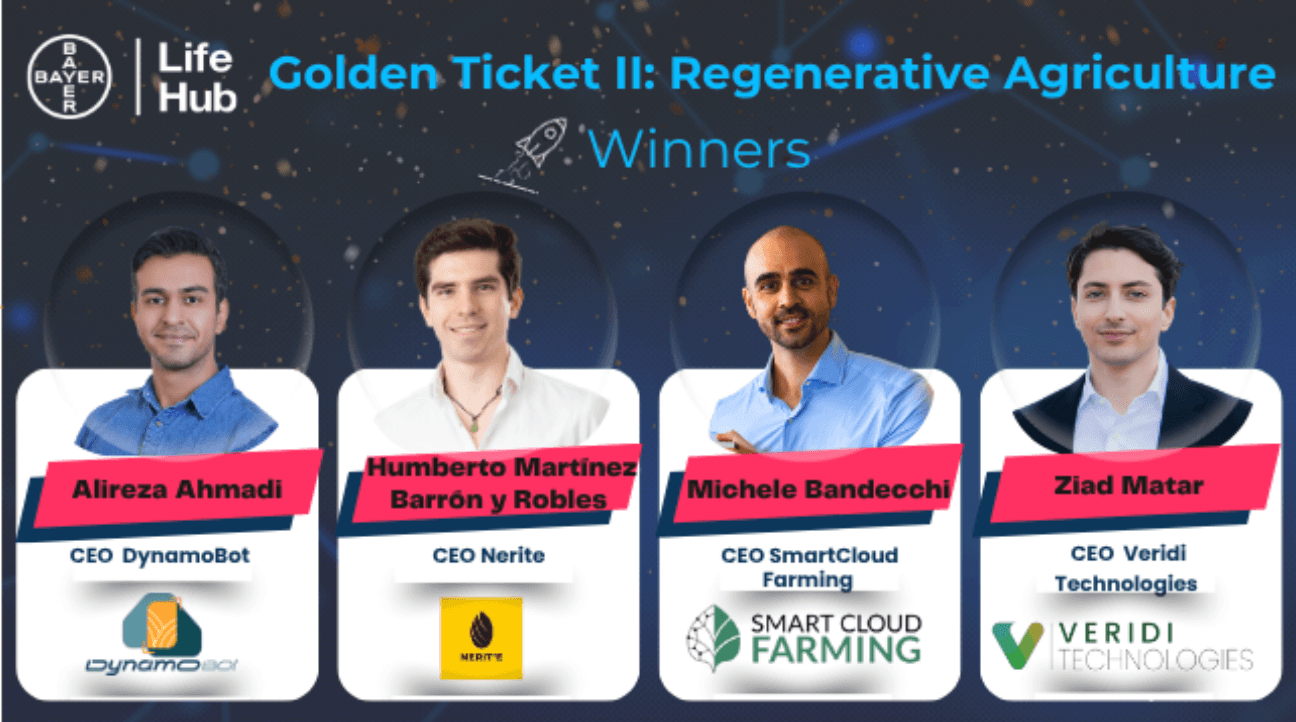
Im Rahmen des Programms Golden Ticket II: Regenerative Agriculture des BayerLifeHub — der ersten Kohorte in Europa und der zweiten überhaupt — wurden jetzt vier junge Unternehmen ausgewählt, um gemeinsam mit unserem Vereinsmitglied Bayer praxisnahe Konzepte zu entwickeln und zu testen. Die vier Start-ups erhalten Zugang zu den Laboren und Expert:innen von Bayer am Standort LifeHub Monheim, dem globalen Hauptsitz von Bayer Crop Science.
Die Auswahl erfolgte aus 47 Bewerbungen aus aller Welt. Bewertet wurden technologische Reife, wissenschaftliche Grundlage und das Potenzial zur Skalierung im landwirtschaftlichen Betrieb. Ziel: neue Methoden für effizienteren Ressourceneinsatz, bessere Bodenqualität und mehr Biodiversität — bei gleichzeitig wirtschaftlicher Tragfähigkeit der Betriebe.
Die ausgewählten Start-ups im Überblick
- DynamoBot (Bonn) entwickelt robotergestützte Systeme zur gezielten Unkrautbehandlung. Die Technologie reduziert den Herbizideinsatz und minimiert Bodenerosion durch präzise, mechanische Eingriffe.
- Nerit'e' (Aachen) arbeitet an einem Sensor, der den Stickstoffgehalt im Boden alle 48 Stunden mit Laborpräzision misst. So lassen sich Düngestrategien optimieren und Überdüngung vermeiden.
- SmartCloudFarming (Berlin) erstellt mithilfe von Satellitendaten und KI detaillierte 3D-Bodenmodelle. Sie liefern fundierte agronomische Entscheidungsgrundlagen, etwa zur CO₂-Bilanz von Bewirtschaftungsmethoden.
- Veridi Technologies BV (Den Haag) kombiniert Mikroskopie und KI, um die biologische Vielfalt im Boden zu analysieren. Ziel ist es, Bodengesundheit messbar, vergleichbar und für Betriebe nutzbar zu machen.
Fokus regenerative Landwirtschaft
Bayer verfolgt mit dem LifeHub-Programm das Ziel, nachhaltige Innovationen durch Kooperation mit Start-ups, Forschung und Landwirtschaft voranzubringen. Im Mittelpunkt steht der Wandel hin zu regenerativer Landwirtschaft: produktiv, klimaresilient, ressourcenschonend.
Konkret heißt das: Technologien und Praktiken fördern, die Erträge sichern und natürliche Systeme stärken — durch Humusaufbau, optimierten Ressourceneinsatz oder biodiversitätsfreundliche Anbausysteme. Erste Pilotprojekte, unter anderem in Argentinien, zeigen messbare Effekte auf CO₂-Bilanz und Ernteertrag, wie Karl Collins in seiner Keynote auf der Ideenfutter Expo 2024 präsentierte. Mehr dazu hier nachlesen.